AFTERLIGHT

Afterlight / Inside the paintings

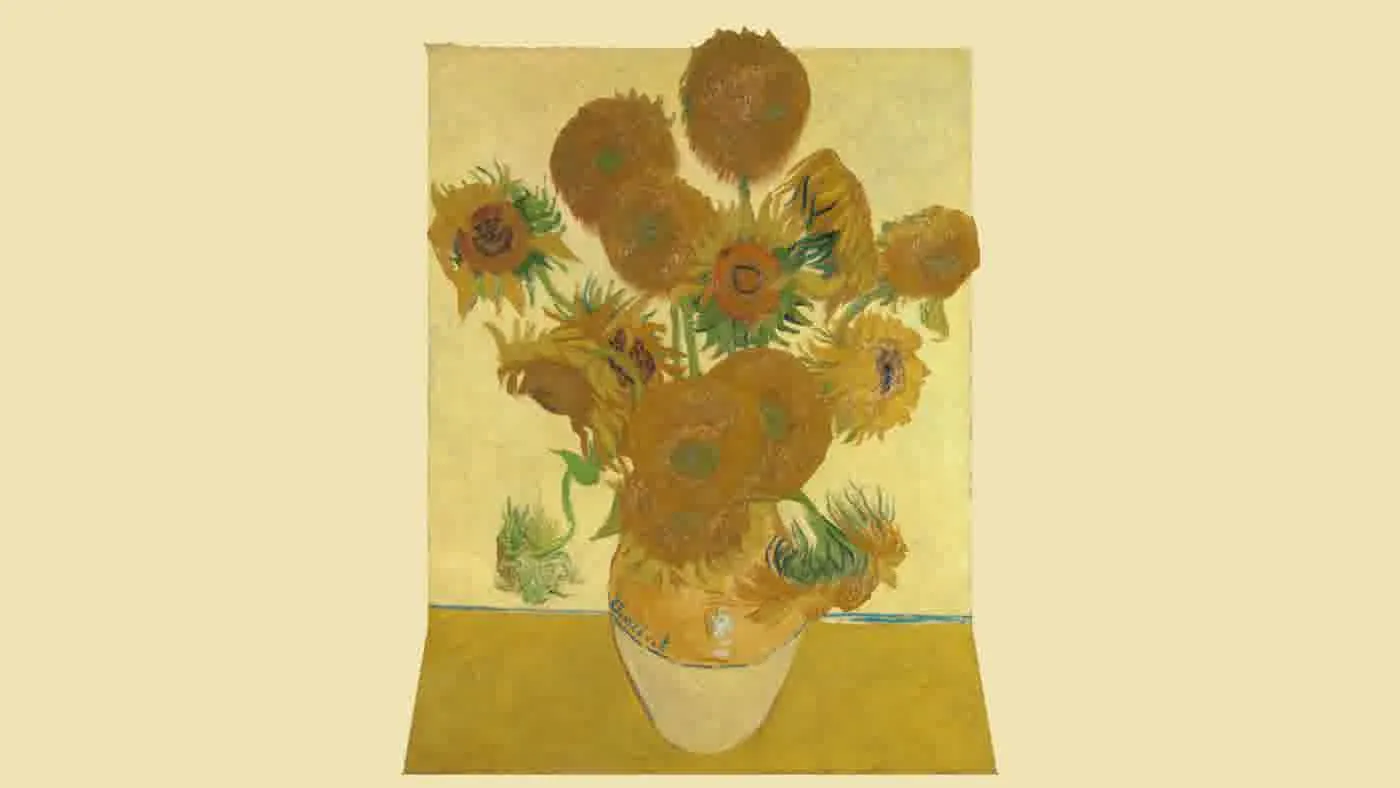
Van Gogh’s Sunflowers standing as a painting, the vase and gold blooms on a pale ground
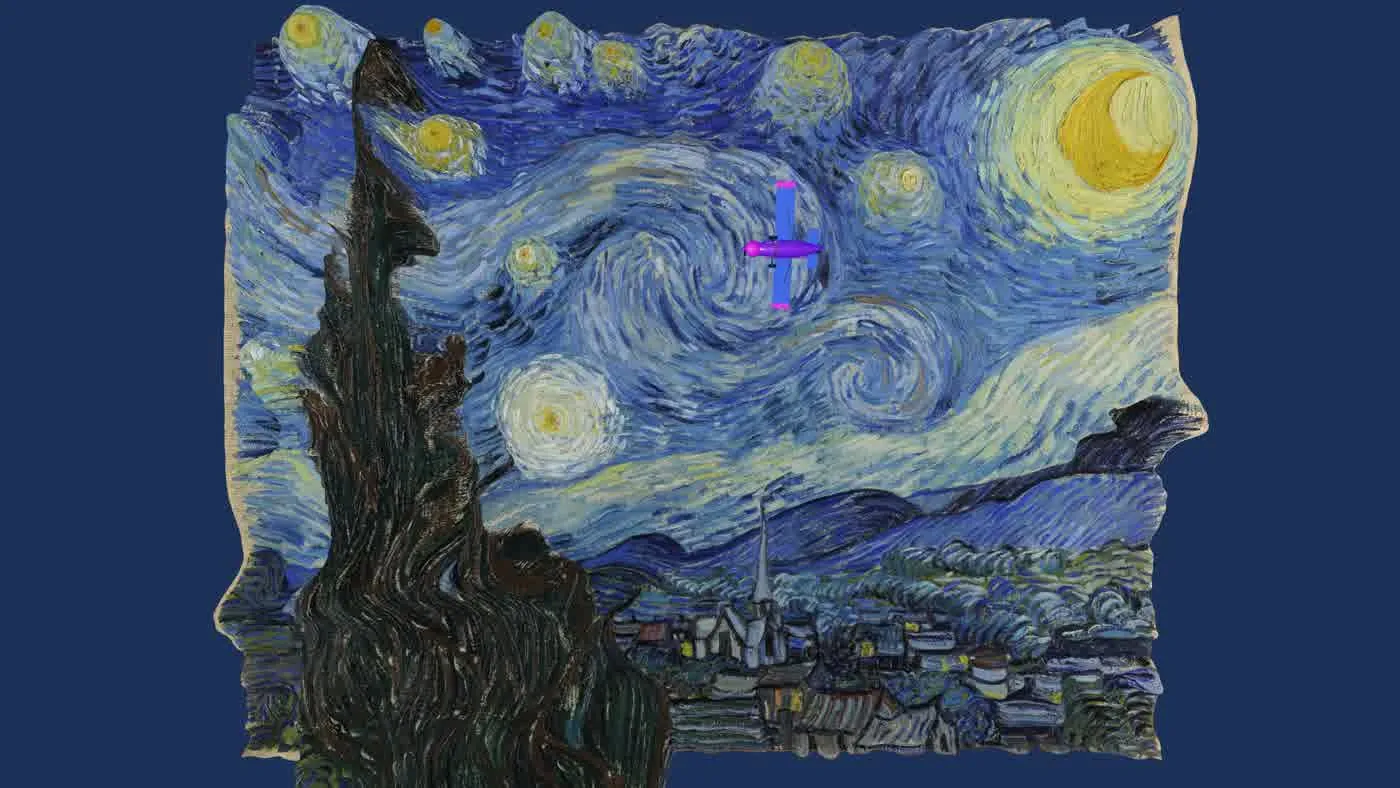
A small magenta plane crosses the whorl of Van Gogh’s The Starry Night, above the village and the cypress
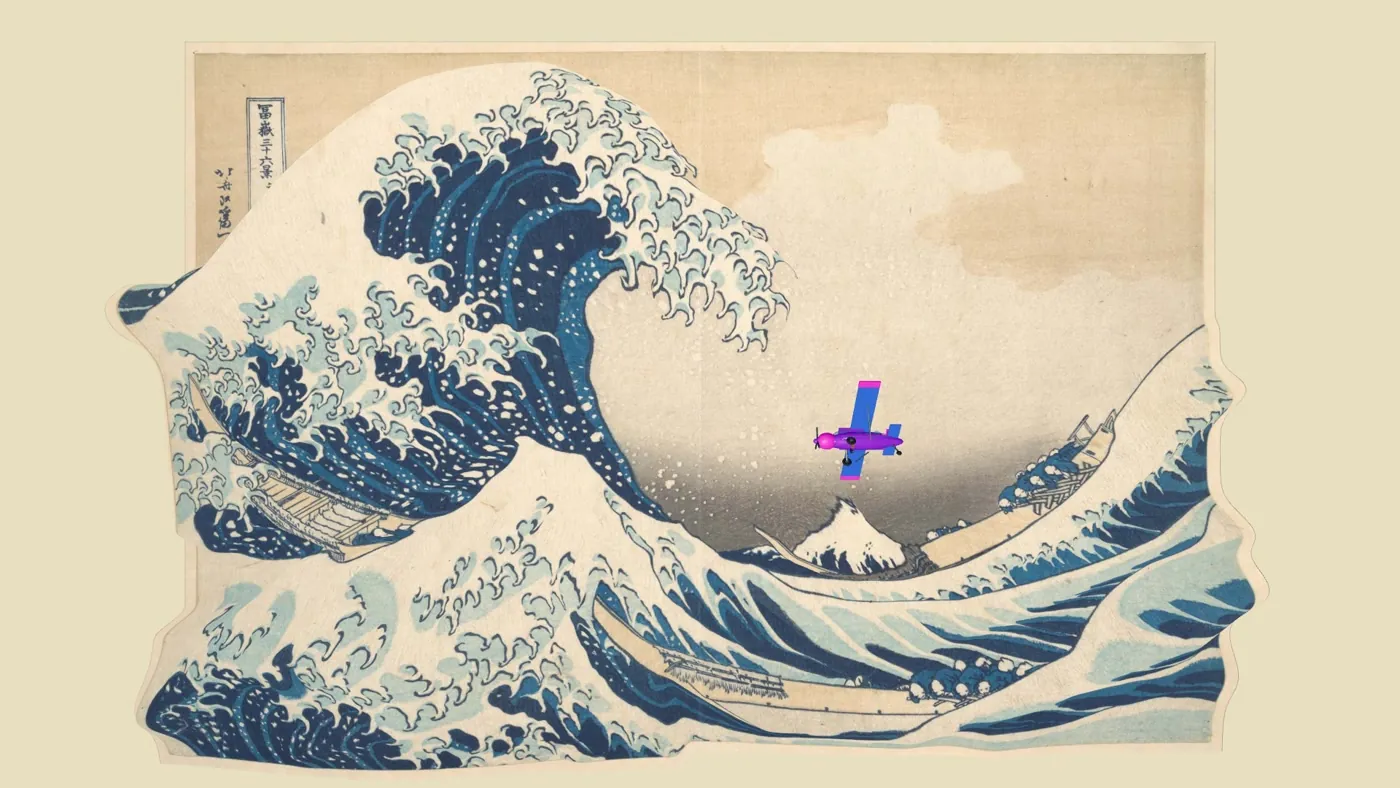
A small magenta plane flies through Hokusai’s Great Wave, above the boats and Mount Fuji

Walk inside six famous paintings.

Afterlight is a free game in the browser. The paintings become places. You climb them, talk to the people who live there, and, after the first five bosses, a llama comes to carry you back.

The journey runs Sunflowers, The Starry Night, Mona Lisa, The Scream, The Persistence of Memory, and The Great Wave.

Begin in Sunflowers

A quest through the paint

Each world is an interpretation of a painting, sculpted into a landscape and textured with a reproduction of the original. You start small on the canvas and the ground rises around you. There is no account and nothing to install. Your story is saved on this device.

Story mode is the game: five quests in every painting, one of them a hunt for eight lights, then a boss. The boss will not set out until those lights are home. Gear, gold, and tonics carry from one painting to the next. Exploring a painting on its own leaves that story alone.

The credits name the collections and the rights. The Persistence of Memory is still in copyright.

The painting stands up

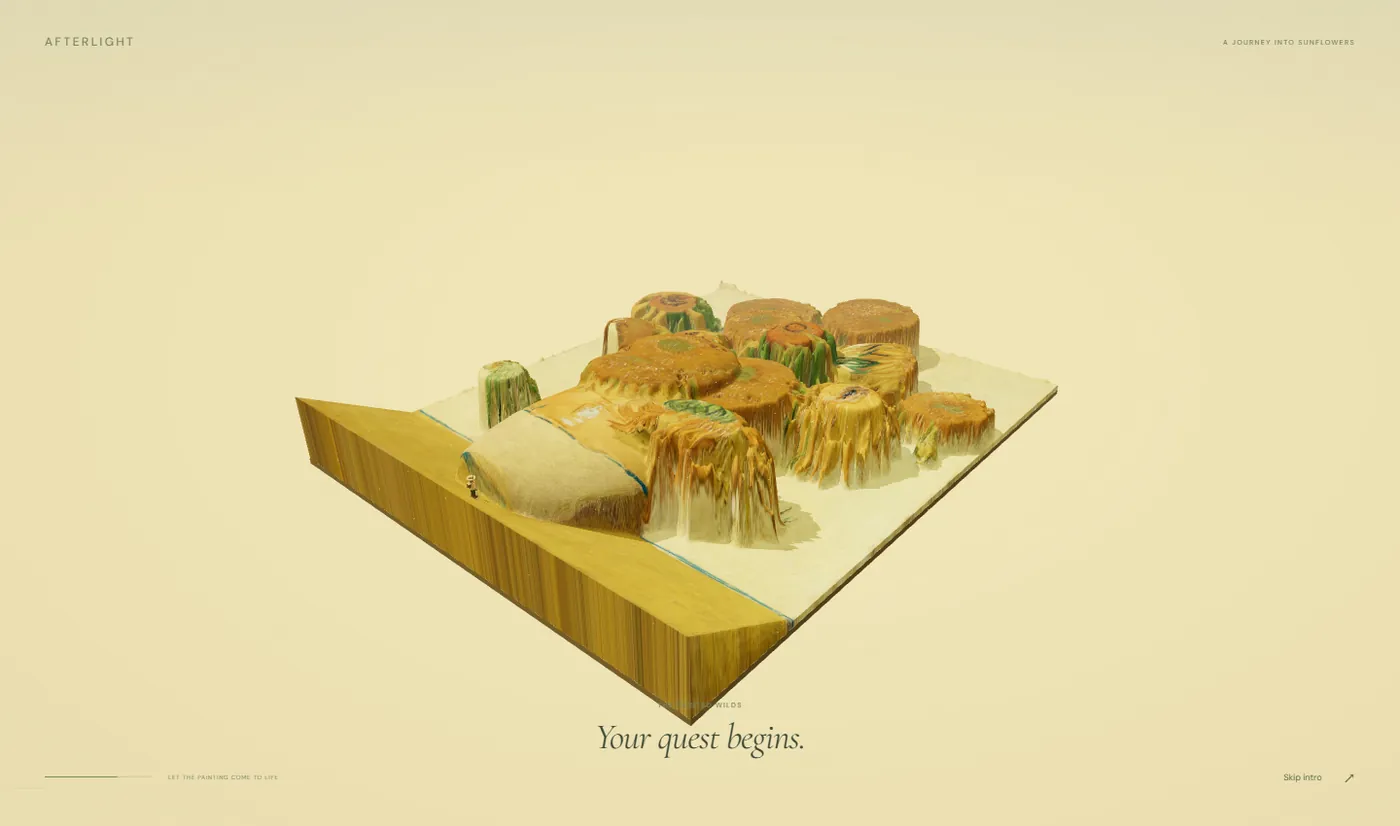
The opening lasts about fourteen seconds. The picture lifts into relief, a figure appears on the shore, and the line is “Your quest begins.” You can skip it. The first steps are on the ochre shore of Sunflowers.

The opening of Afterlight: Van Gogh’s Sunflowers lifted into a small landscape, with the words Your quest begins
Sunflowers, as the quest begins. The intro can be skipped.

Two ways in

Story mode

The full adventure. Townsfolk, quests, hidden rooms, a stall in every painting, and a journey that only moves forward when the painting is quiet again.

You begin in Sunflowers and travel on, in order. Later paintings stay closed until you have walked the ones before them. Come back later and the story is where you left it.
Play the story

Just wandering

Pick any painting and roam it. Creatures still prowl, and a cinema crate is waiting. There are no quests, no townsfolk, no hidden rooms, and no journey onward.

Exploring does not touch your story save. The llama does not come.

Choose a painting

ISunflowers

Vincent van Gogh, 1888. The Painted Wilds.

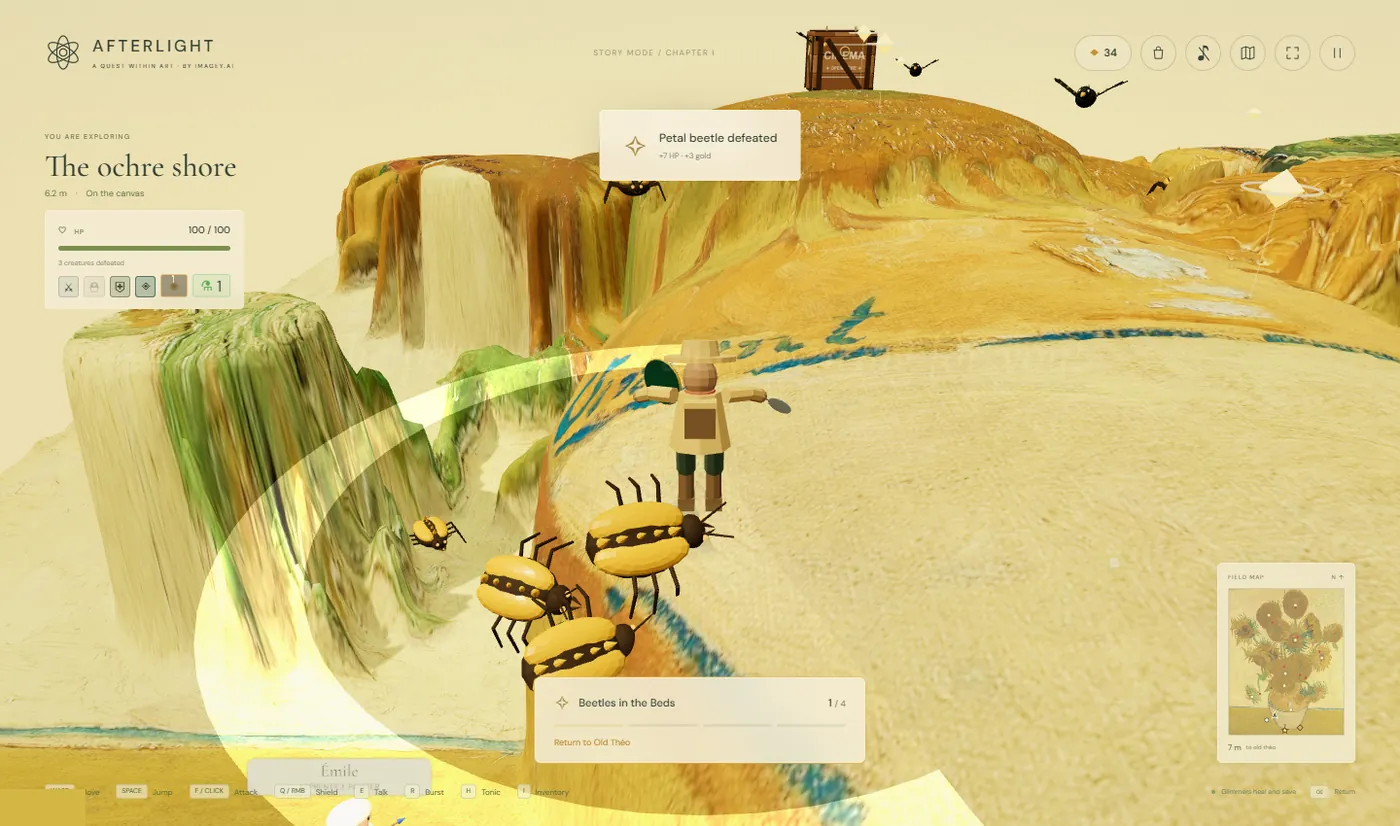
On the ochre shore of Sunflowers, the painter faces petal beetles, with a cinema crate on the hill and the quest Beetles in the Beds
The ochre shore. Petal beetles, and the first quest, Beetles in the Beds.

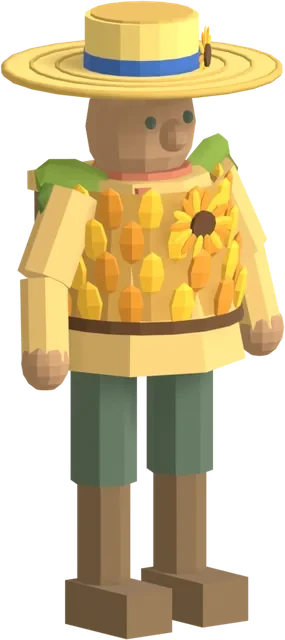
The vase is a hill. The blooms are a country. Old Théo keeps the garden, Émile is learning to paint, and Marguerite sells seeds and sundries from a stall: a straw hat, a tunic of petals, a sickle, and linseed tonic.

You meet
Old Théo, the gardener. Émile, the apprentice. Marguerite, at the stall.
The work
Beetles in the Beds. A Hat for the Sun. The Gardener’s Cellar. The Scattered Blooms, eight golden lights. Then Thornback, the Wilted King, in the sunflower crown.
In the paint
Petal beetles and thorn crows. The Queen Wasp keeps the cellar beside the vase. The helmet here is the Straw Hat of Arles.

Begin the story here

IIThe Starry Night

Vincent van Gogh, 1889. The Starry Wilds.

The Starry Night as a walkable relief: cypress, swirling hills, the village, and the moon, seen from above
The night, stood up. Cypress, village, hills, and the moon.

The sky is a range you can climb. Bastien keeps the night watch. The Cypress Hermit counts what the tree can feel. Céleste sells from a stargazer’s cart.

You meet
Bastien, the night watchman. The Cypress Hermit. Céleste, with the cart.
The work
Stardust. Shadows of the Cypress. The Bell Crypt. Gaps in the Sky, eight fallen stars. Then the Whorl Wraith.
In the paint
Star wisps and cypress shades. The Night-watch Owl lives under the church and insists there are eleven stars. The helmet is the Night-watch Helm.

Wander The Starry Night

IIIMona Lisa

Leonardo da Vinci, c. 1503–1519. The Sfumato Wilds.

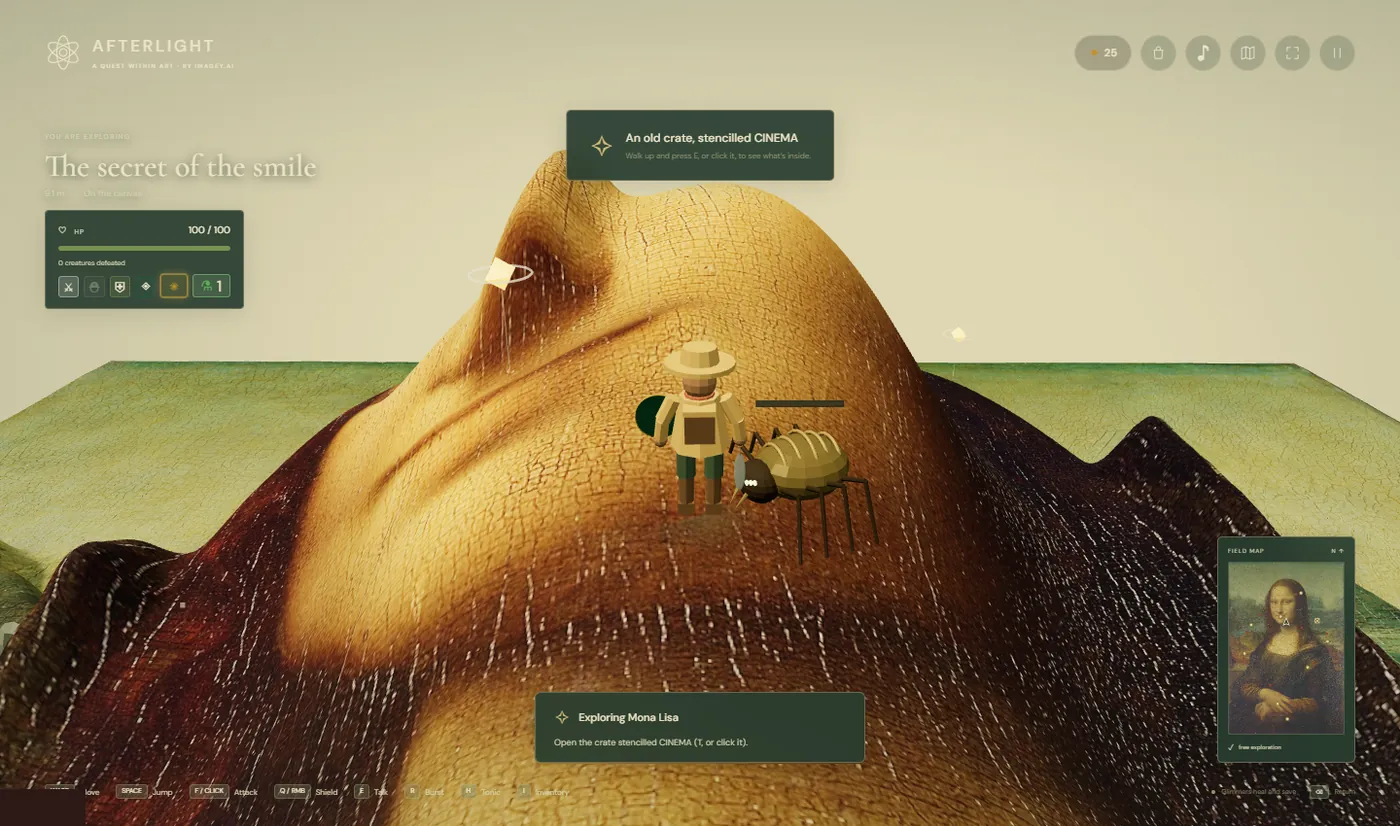
A small painter stands on the cracked paint of the Mona Lisa’s smile, beside a varnish crawler and a crate stencilled CINEMA
On the smile. The paint is cracked, and a crate marked CINEMA is waiting.

You walk the folded hands, the road, the bridge, and the face itself. Caterina serves Lisa. Old Matteo keeps the bridge. Signor Giotto trades Florentine wares. Behind the smile is a study Leonardo left shut.

You meet
Caterina, Lisa’s handmaid. Old Matteo, keeper of the bridge. Signor Giotto.
The work
Cracks in the Varnish. The Bridge-keeper. Behind the Smile. Leonardo’s Lost Gears, eight of them. Then the Veiled One.
In the paint
Varnish crawlers and sfumato specters. Leonardo’s Automaton, a mechanical knight from about 1495, guards the study. The helmet is the Florentine Cap.

Wander the Mona Lisa

IVThe Scream

Edvard Munch, 1893. The Ember Wilds.

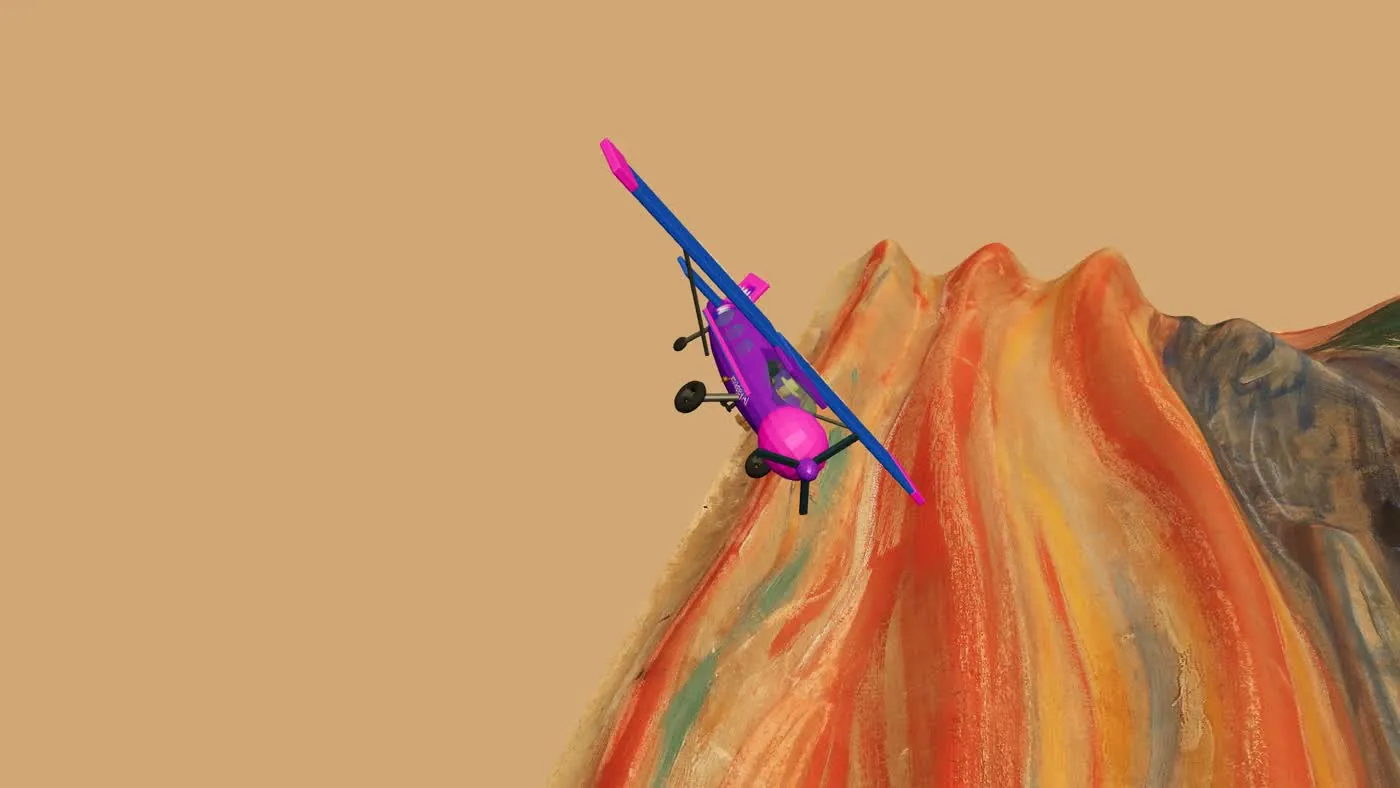
A magenta plane banks over the ridged orange and red sky of Munch’s The Scream
The sky of The Scream, ridged like a hillside, on the flight home.

The promenade, the fjord, and a sky Munch called blood red. Anders is a friend on the walk. Ingrid is one of the distant figures. The Ember Tinker works a forge on the boardwalk.

You meet
Anders. Ingrid, the distant walker. The Ember Tinker.
The work
Echoes. Hounds of Dusk. The Fjord Vault. Embers of the Sunset, eight of them. Then The Cry Itself: the Howl.
In the paint
Ember hounds and wailing shades. A Lantern Angler waits in the Fjord Vault and asks you to come closer. The helmet is the Fjord Helm.

Wander The Scream

VThe Persistence of Memory

Salvador Dalí, 1931. The Timeless Shore. Still in copyright. See the credits.

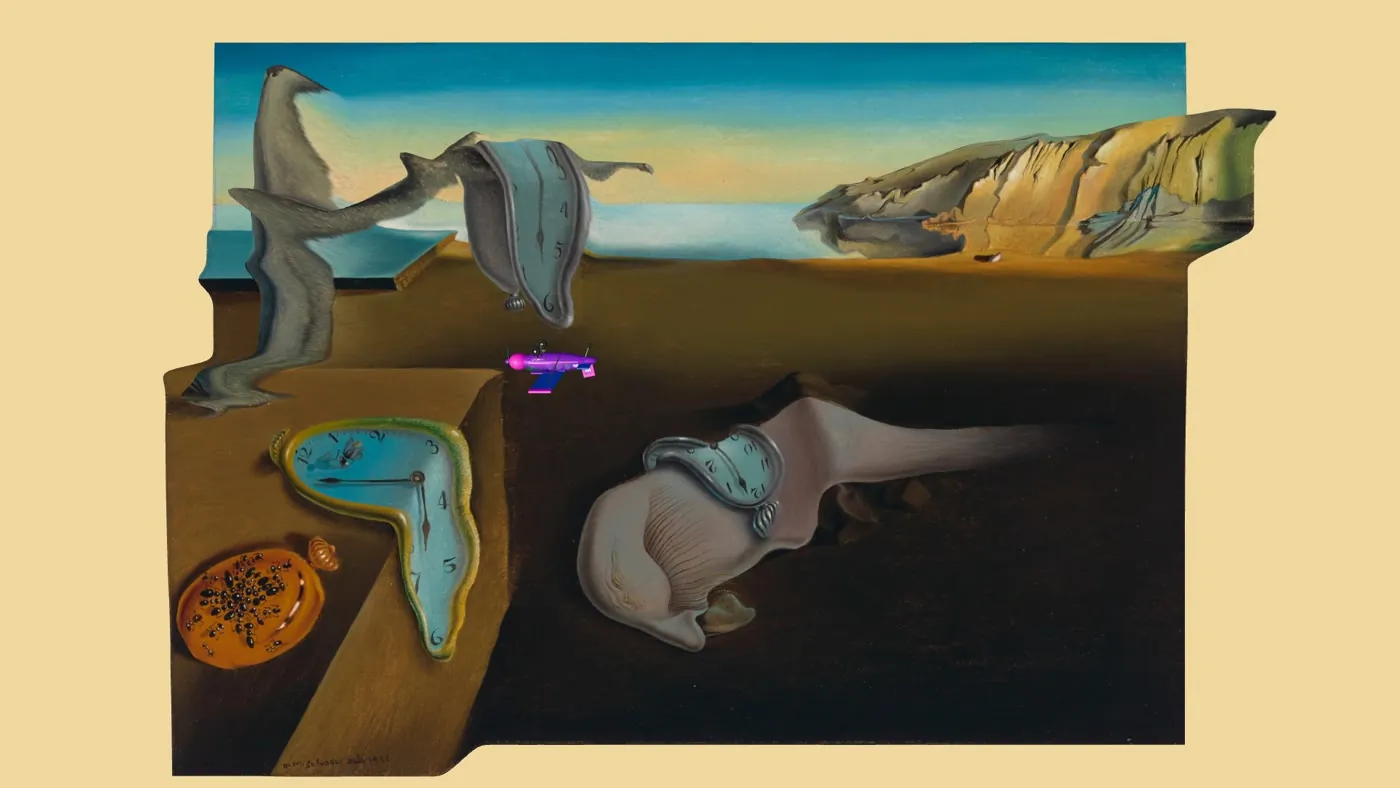
Dalí’s Persistence of Memory, with melting watches, the sleeping figure, and a small magenta plane over the shore
The soft watches, the sleeper, and the plane that crosses them on the way home.

Time here is lazy on purpose. Salvo the clockmaker winds what he can. Gala remembers the minutes that slipped. The Hour Merchant sells what is left. The shore, the branch, the cliffs, and the sleeper are all walkable.

You meet
Salvo, the clockmaker. Gala, who remembers. The Hour Merchant.
The work
Wind the Watches. Ants in the Gears. The Room of Kept Hours. Every Last Minute, eight lost moments. Then the Hour Devourer.
In the paint
Clock ants and melting watches. The Ant Timekeeper files every lost minute and is not expecting you. The helmet is the Clockwork Crown.

Wander the timeless shore

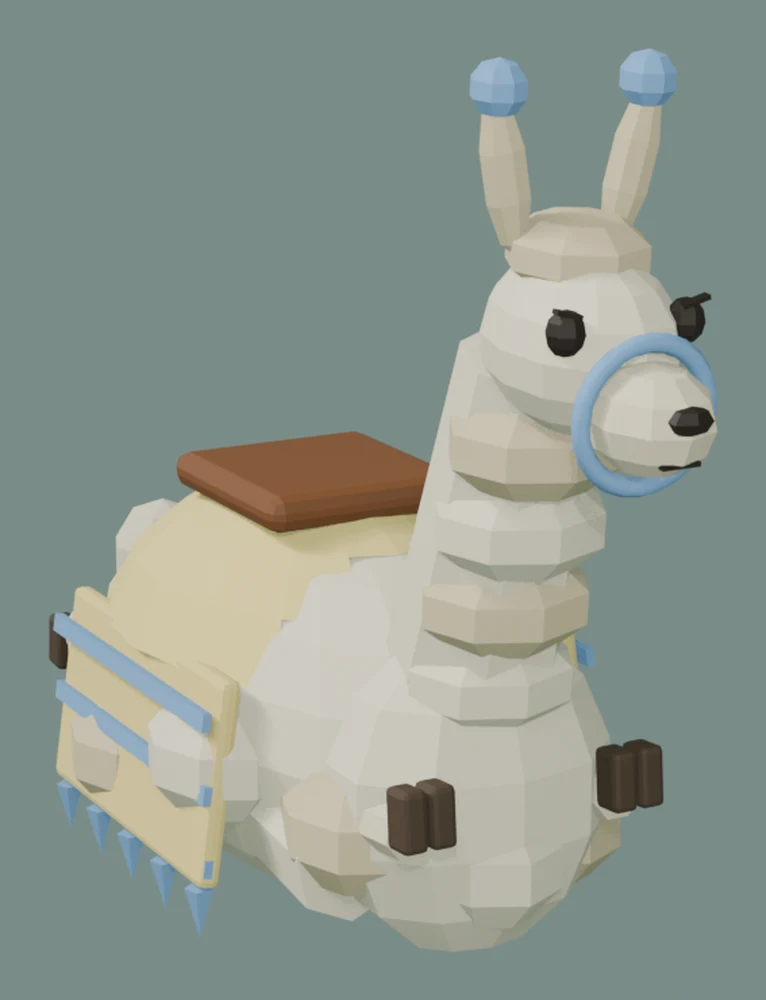
The Afterlight llama kneeling and facing forward, in a pale yellow blanket with blue trim, a brown saddle, a blue nose ring, and blue pom-poms on its ears

Your Llama has arrived!

That is the line on the screen. In Story mode, after each of the first five bosses, the death cutscene ends, and then the llama hops in and kneels. It announces itself. Loudly. A bleat, and one of its little recorded quirks, and the banner holds while it settles.

The blanket takes the colours of the painting you are standing in.

  • Sunflowers, gold and blue
  • Starry Night, blue and yellow
  • Mona Lisa, brown and gilt
  • The Scream, red and fjord blue
  • Memory, pale blue and gold

Walk up to it. The prompt reads “Ride back to Old Théo”, or Bastien, Caterina, Anders, or Salvo: whoever gave you the fight. The ride bounces. It bleats. The whole ride. It sets you down in front of them so you can hand the quest in. If the hops go on, you can skip straight to that person.

It does this once. Leave and come back before you have handed the quest in, and the llama is still kneeling. It does not announce itself again. When the quest is done, it hops away and fades.

Free exploration has no llama. The Great Wave does not send one either. By then Leonardo’s automaton has finished a flying machine, and that is how you leave.

VIThe Great Wave

Katsushika Hokusai, Under the Wave off Kanagawa, c. 1830–1832. The Frozen Tide.

Hokusai’s Great Wave held still, boats in the foam, Fuji beyond, and a small plane in the sky
The wave, held. Fuji has not moved. The plane is already in the sky.

An ocean that does not fall. Kenji fishes from the boats. The Pilgrim is walking to Fuji. Oyuki trades from the deck. There is no llama here. When the crest finally breaks, you board the automaton’s plane.

You meet
Kenji, the fisherman. The Pilgrim, walking to Fuji. Oyuki, the deck-side trader.
The work
Lost Oars. Crabs on Deck. The Drowned Shrine. Pearls of the Wave, eight of them. Then the Leviathan of the Crest.
In the paint
Reef crabs and foam serpents. A lone Komainu guards the drowned shrine, because its partner went out with the wave. The helmet is the Kabuto of the Wave.

Wander The Great Wave

The six bosses

The boss will not set out until the eight lights of its painting are home. These are the six, in the order you meet them.

  1. Thornback, the Wilted King Sunflowers
  2. The Whorl Wraith The Starry Night
  3. The Veiled One Mona Lisa
  4. The Howl The Scream
  5. The Hour Devourer The Persistence of Memory
  6. Leviathan of the Crest The Great Wave

Hidden rooms

Every painting has a door that only shimmers when you stand close. Step through and someone is already offended that you came. They talk, then they fight. Beat them and a chest is yours. These rooms are part of the story. They are not there when you are only wandering.

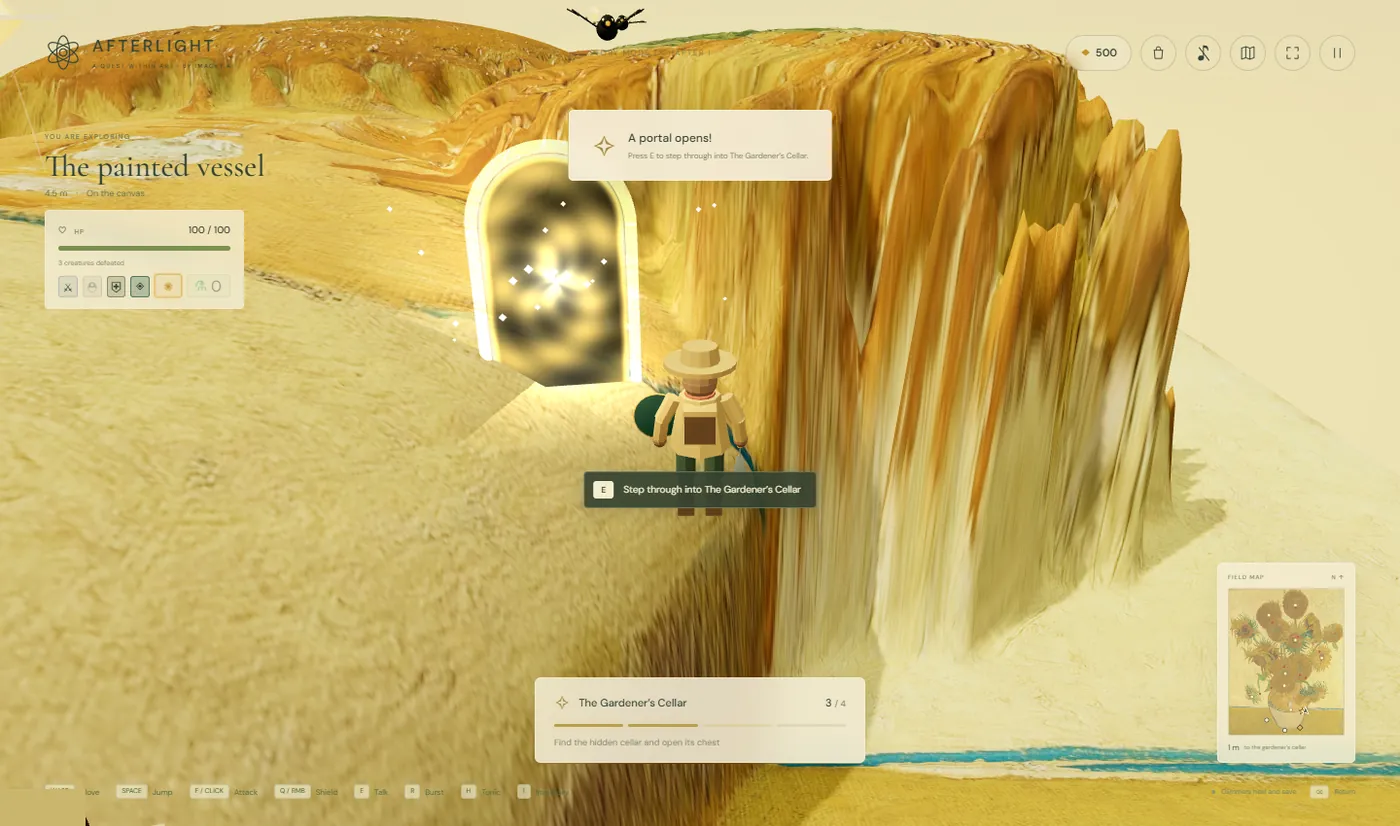
A glowing arched portal in the painted vase of Sunflowers, with the prompt Step through into The Gardener’s Cellar
The door beside the vase. It only shows itself up close.
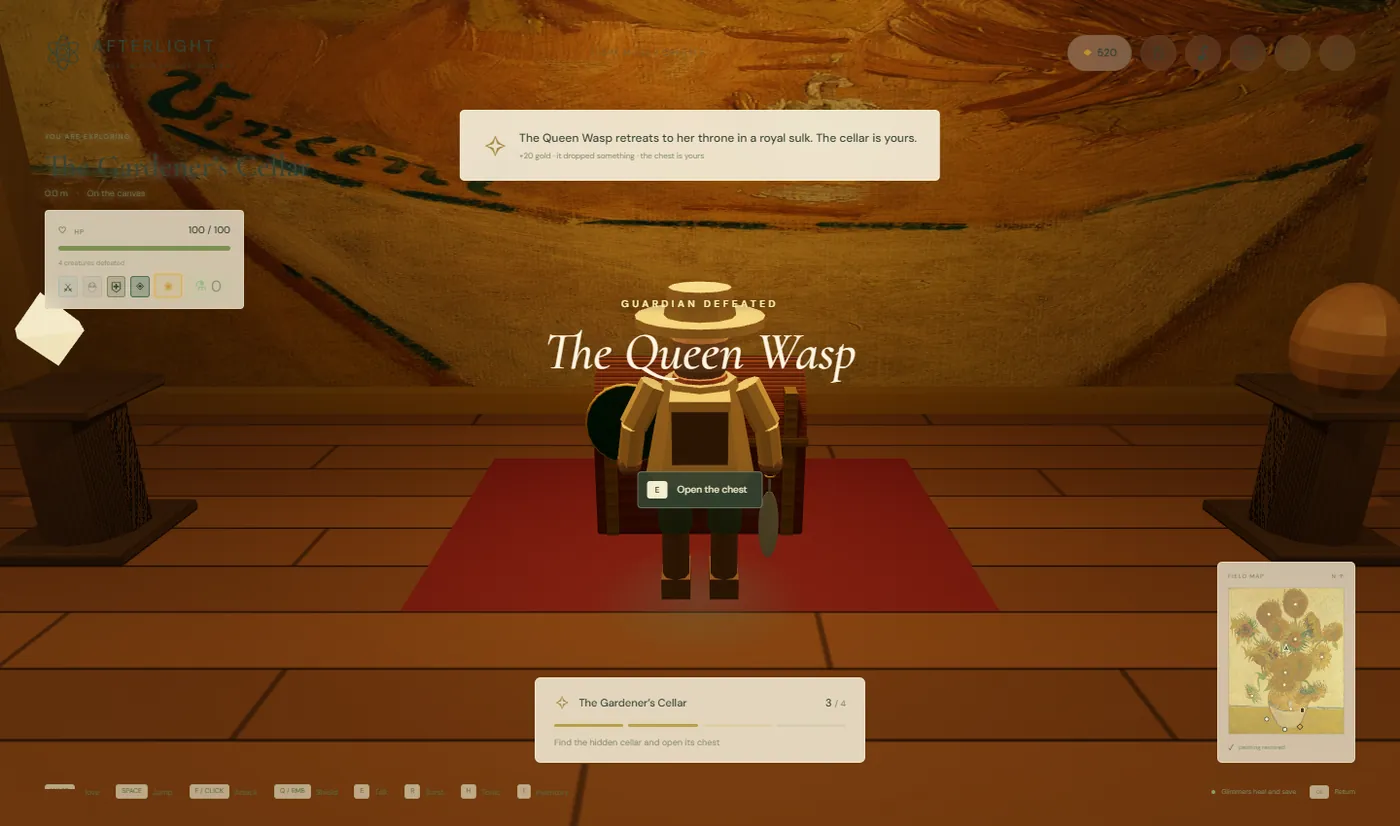
Inside the Gardener’s Cellar, the Queen Wasp is defeated and a chest waits on a red rug
The Queen Wasp retreats. The cellar, and the chest, are yours.
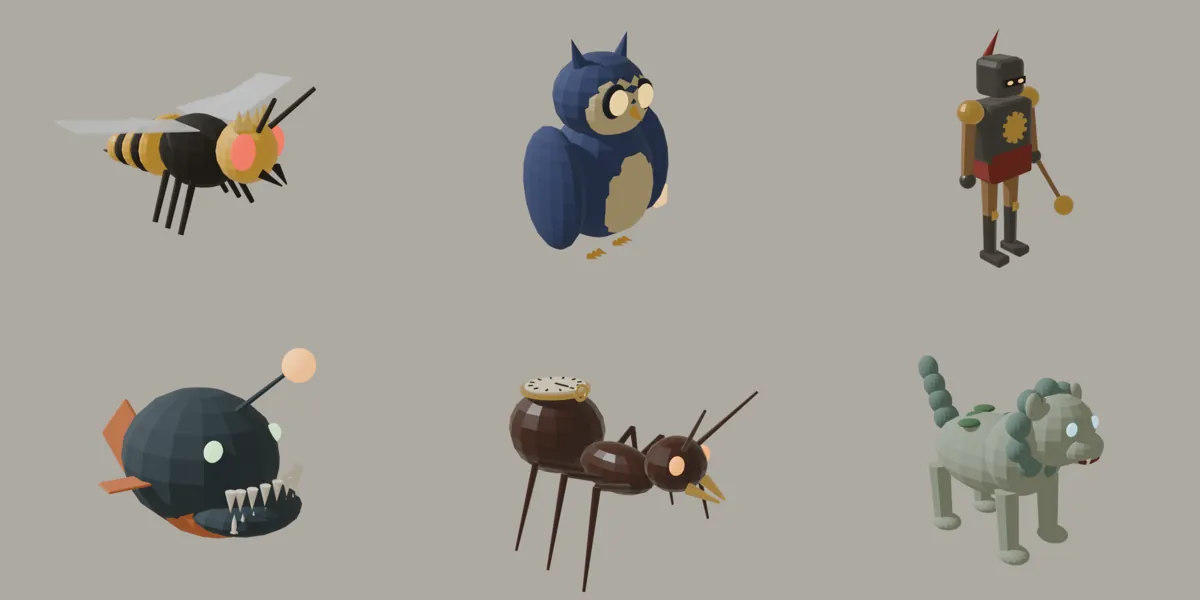
The six hidden-room guardians: the Queen Wasp, the Night-watch Owl, Leonardo’s Automaton, the Lantern Angler, the Ant Timekeeper, and the Komainu
Queen Wasp, Night-watch Owl, Leonardo’s Automaton, Lantern Angler, Ant Timekeeper, Komainu.

The Gardener’s Cellar sits beside the vase. The Bell Crypt is under the village church. Leonardo’s Hidden Study is behind the smile. The Fjord Vault lies along the blue water. The Room of Kept Hours is beneath the old table. The Drowned Shrine is under the boat below Fuji.

A cinema in the open

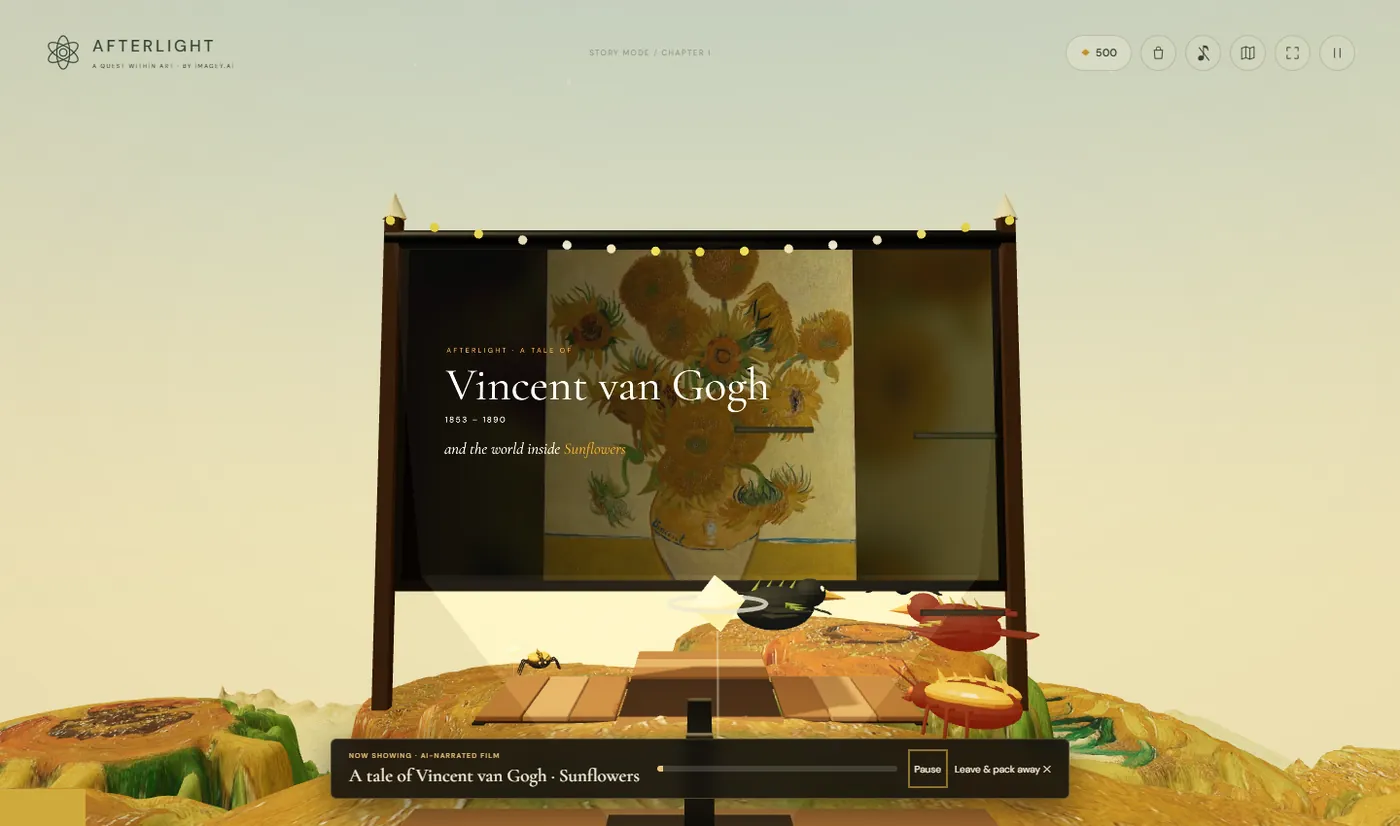
Each painting hides a crate stencilled CINEMA. Walk up and press E, or click it. It unpacks into a little deck and plays a short film about the artist, about two minutes. Space pauses. Esc stands you up, and the cinema packs away. Once you have found a crate, you can open that film again from your pack, wherever you are standing.

The films are in the game. Sources, narration, and the Dalí credit are on the credits page. A cinema crate is also there when you are only exploring.

An outdoor cinema on the Sunflowers landscape, screening a tale of Vincent van Gogh, with Pause and Leave and pack away
A tale of Vincent van Gogh, playing where you unpacked the crate.

Stalls, and what you wear

You begin with a Painter’s Cap, a Linen Smock, a Palette Knife, and a Pot-lid Buckler. Four slots travel with you: sword, helmet, armour, and shield. Each stall sells a helmet, armour, a masterwork, and Linseed Tonic. The tonic restores 45 health. You can carry five, and you drink with H.

Marguerite, Céleste, Signor Giotto, the Ember Tinker, the Hour Merchant, and Oyuki. The hat changes with the painting. So does the cloth.

The Sunflowers outfit: a straw hat with a blue band, a tunic of sunflower petals, and green trousers
Sunflowers
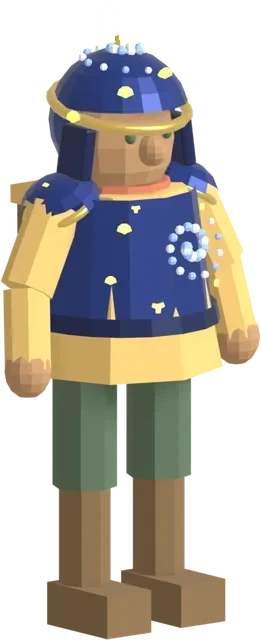
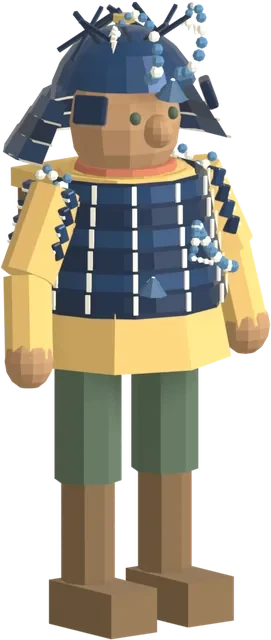
The Starry Night outfit: a blue helm dotted with stars, and a blue vest with a swirl of white beads
Starry Night
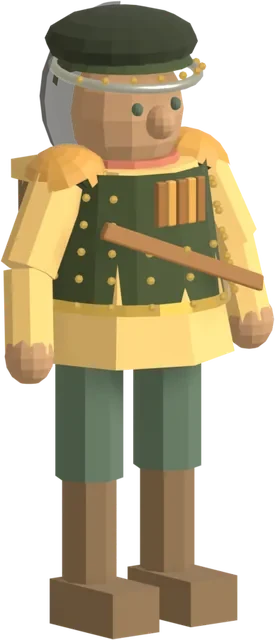
The Mona Lisa outfit: a dark Florentine cap and a green vest with gold buttons
Mona Lisa
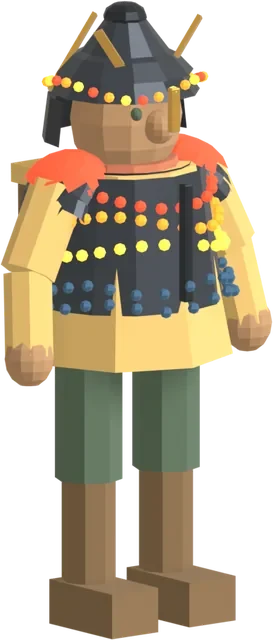
The Scream outfit: a pointed helm with an orange band, and a dark chest dotted like embers
The Scream
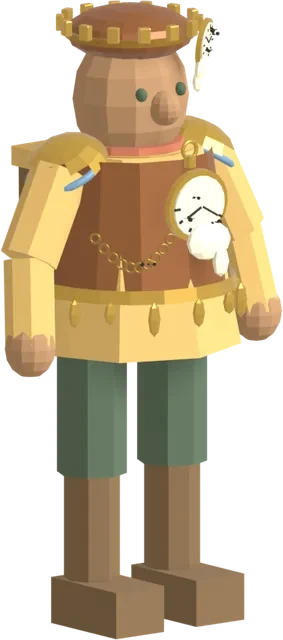
The Persistence of Memory outfit: a gold clockwork crown, a brown vest, and a pocket watch
Memory
The Great Wave outfit: a beaded kabuto and striped indigo armour
Great Wave
Marguerite’s stall in Sunflowers, selling the Straw Hat of Arles, a Petal-woven Tunic, the Harvest Sickle, and Linseed Tonic
Marguerite’s stall. The Straw Hat of Arles, and a tonic that tastes faintly of linseed.

The field map

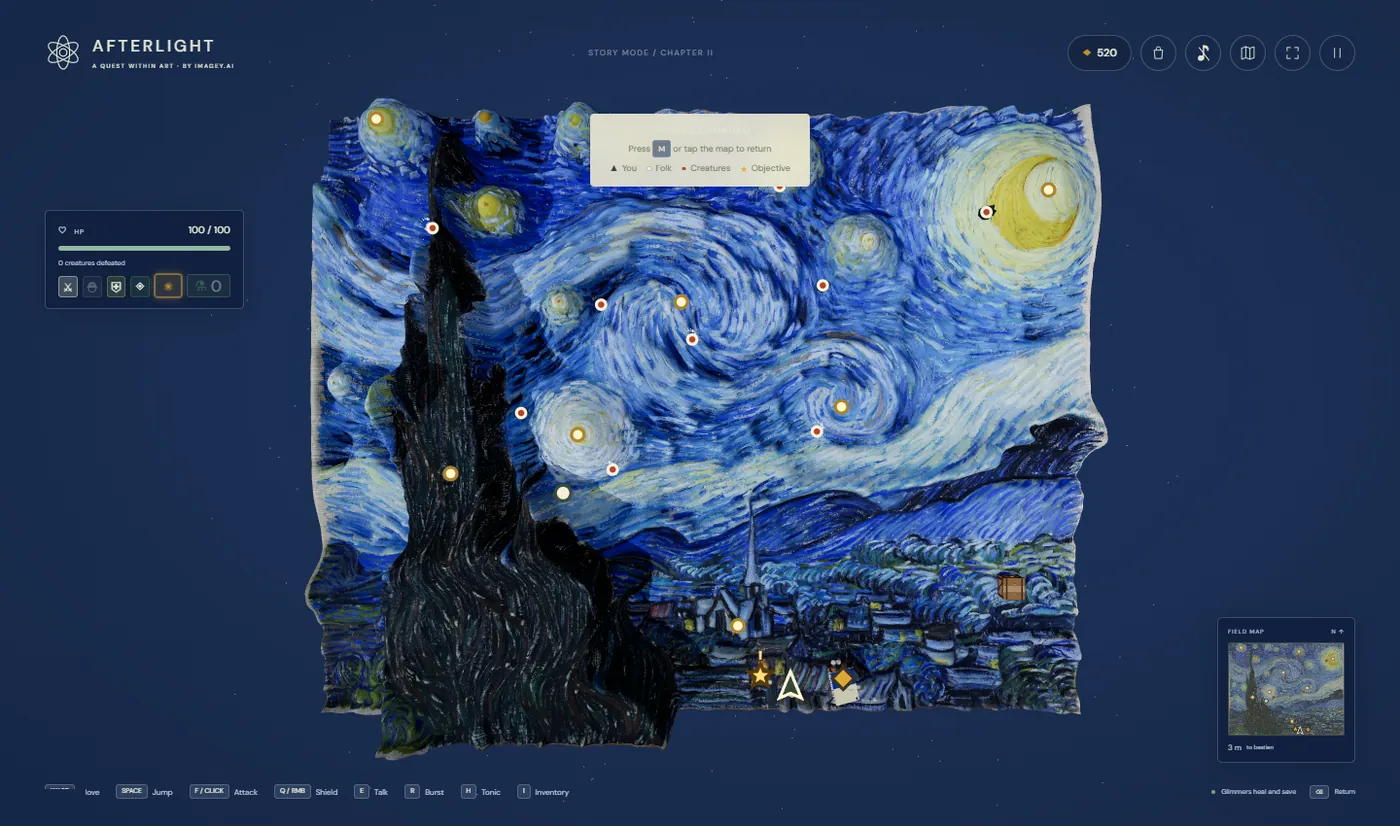
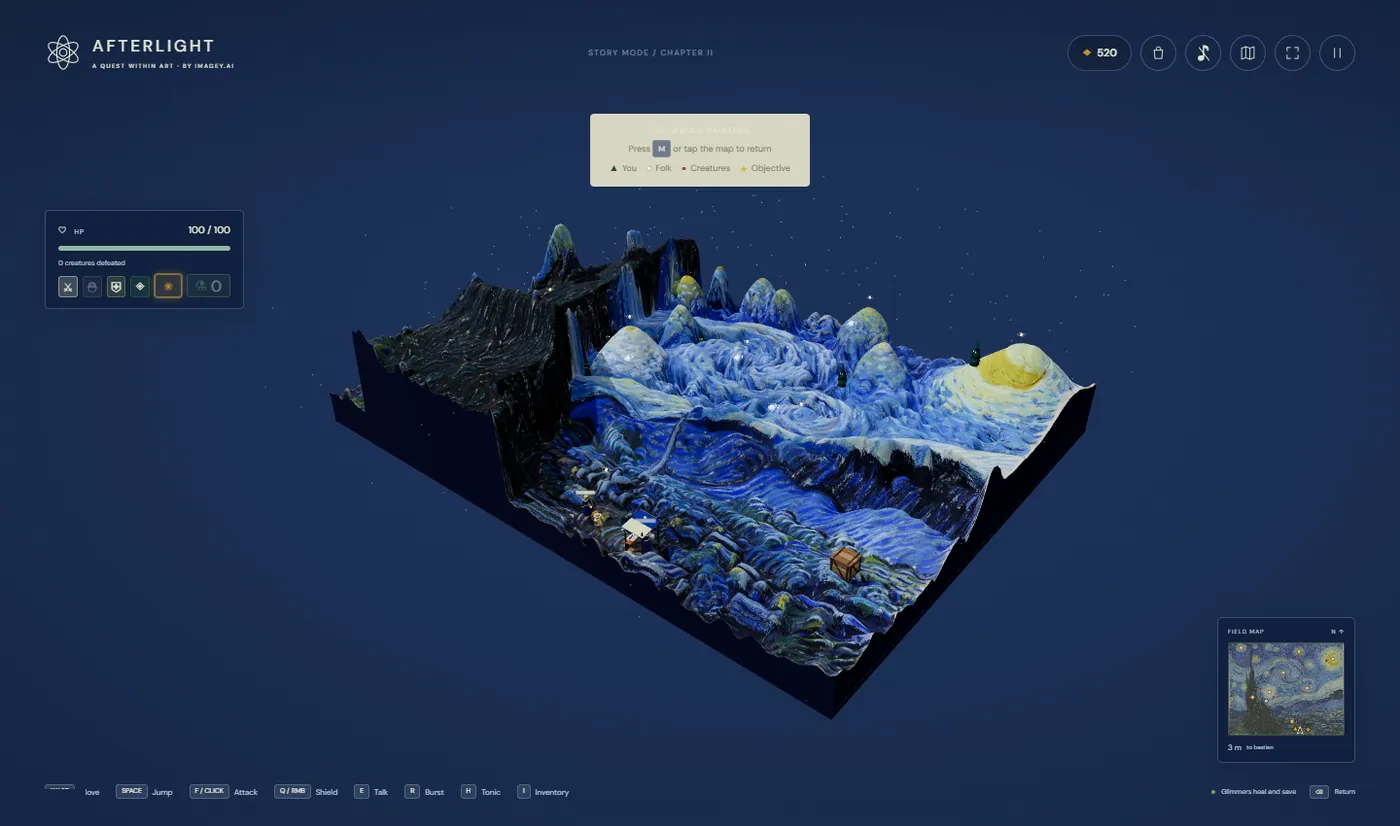
Press M, or tap the map. You, the folk, the creatures, and the current objective are marked on the painting itself. Lights still out in the world show here too. Hidden doors do not. You have to be standing next to one before it shimmers.

The field map of The Starry Night, with markers for you, folk, creatures, and the objective across the swirling sky
The Starry Night, mapped. Press M to come back down.

The flight home

Finish The Great Wave and the automaton, the same knight who guarded Leonardo’s study, has a second lesson. Leonardo sketched flying machines for years. The automaton finished one. You board, and the plane flies back over all six paintings, wave, memory, the scream, the smile, the stars, and the vase, and then the picture fades into the gallery you started from.

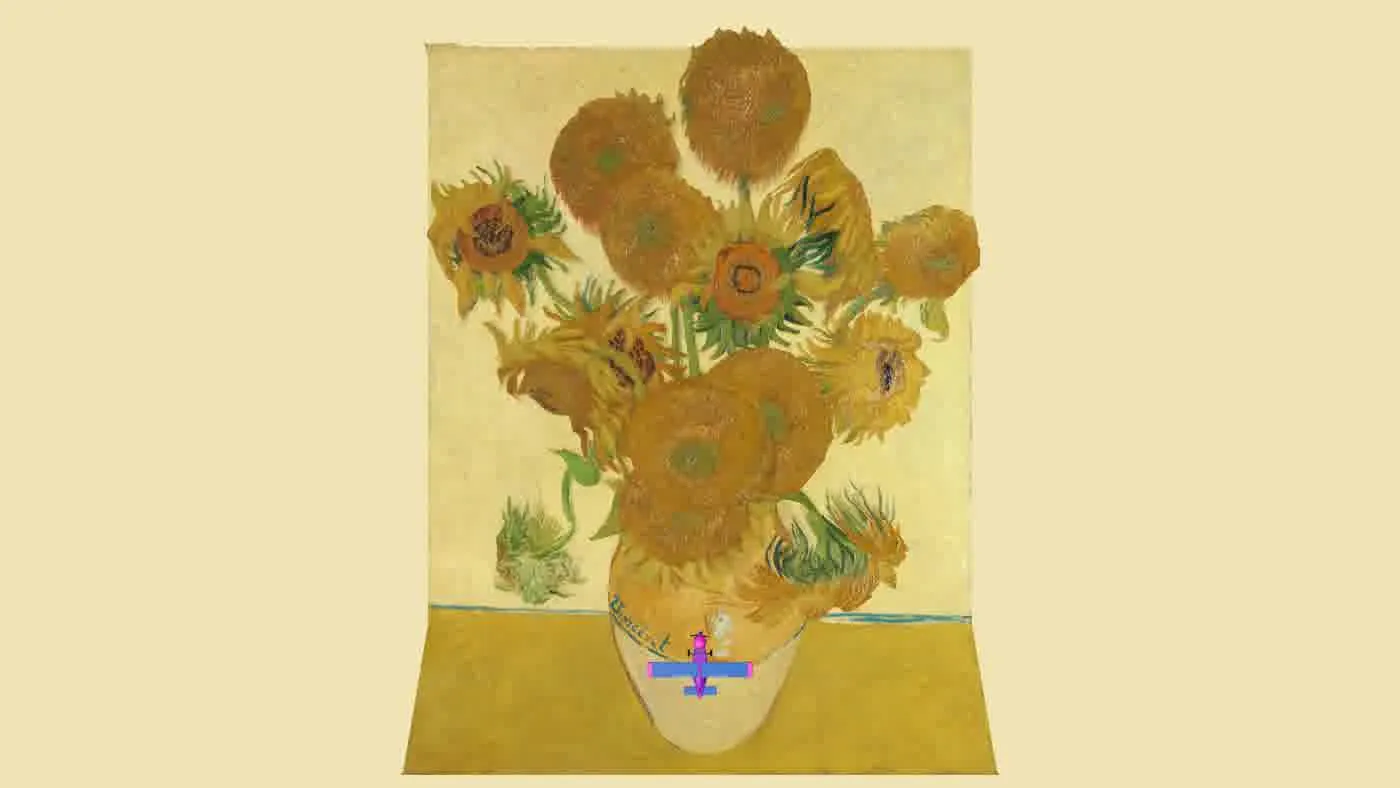
A tiny magenta plane with blue wings sits on the vase in Van Gogh’s Sunflowers, near the end of the flight home
Last of the six. The plane, very small, against the vase.

A roll of the journey

The same places, in the order you meet them. Drag or scroll sideways.

Sunflowers rising into a landscape at the start of the quest
The opening.
Fighting petal beetles on the ochre shore of Sunflowers
Beetles on the shore.
The hidden portal into the Gardener’s Cellar
A door in the vase.
Marguerite’s shop, with the Straw Hat of Arles
Marguerite.
The outdoor cinema playing a film about Van Gogh
The cinema.
Field map of The Starry Night
The night, mapped.
Walking on the Mona Lisa’s smile beside a cinema crate
The smile.
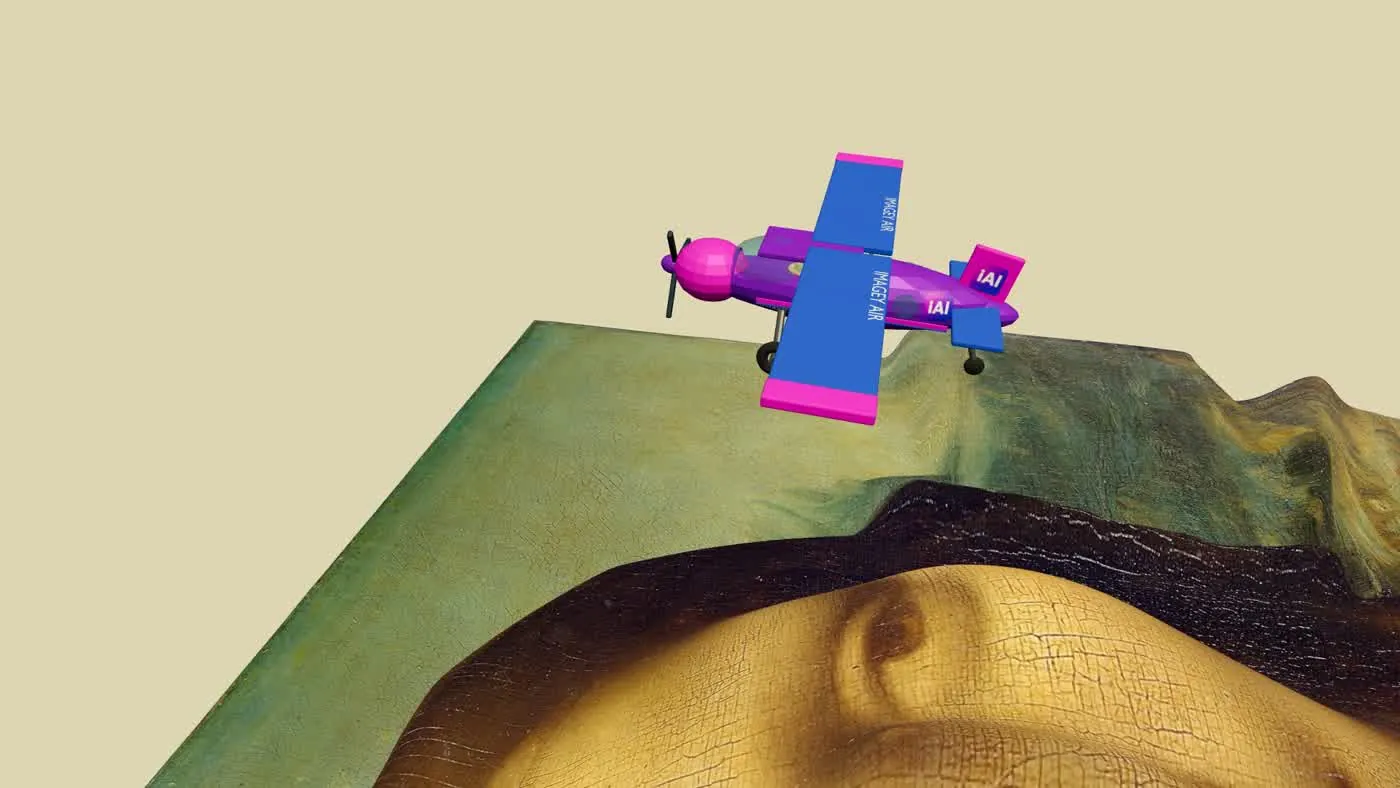
The flight home crossing the face of the Mona Lisa
Over the face.
The plane over the orange ridges of The Scream
The red sky.
The plane over Dalí’s melting watches
The soft watches.
The plane against the sunflower vase
Home, almost.

How you move

Keyboard, touch, or a controller. On a phone the joystick is at the bottom left and the actions at the bottom right. Climb by walking into a steep face. Jump to let go. Raise the shield just as a blow lands and you parry it. Paint Burst hits everything around you.

Move
W A S D Controller: Left stick
Run
Shift Controller: RB
Jump
Space Controller: A
Attack
1 F or click Controller: X or RT
Shield
Q or right-click Controller: LB or LT
Dodge
C Controller: B or RS
Talk, trade, open
E Controller: B
Paint Burst
2 or R Controller: Y
Tonic
H Controller: D-pad up
Inventory
I Controller: D-pad down
Map
M Controller: View
Pause
Esc Controller: Menu

Questions

Is Afterlight free?

Yes. It runs in the browser. There is no account, no download, and no payment.

Which paintings can I walk through?

Six: Van Gogh’s Sunflowers (1888) and The Starry Night (1889), Leonardo’s Mona Lisa (c. 1503–1519), Munch’s The Scream (1893), Dalí’s The Persistence of Memory (1931), and Hokusai’s The Great Wave (c. 1830–1832).

What is the difference between Story mode and exploring?

Story mode is the full game: quests, townsfolk, hidden rooms, bosses, and the journey from painting to painting. Exploring lets you roam one painting. Creatures are still there, and so is a cinema crate, but there are no quests, townsfolk, hidden rooms, or journey onward. Exploring does not change your story save.

Can I play on a phone?

Yes. A joystick sits at the bottom left and the actions at the bottom right. A keyboard or a controller works too.

What is the llama?

In Story mode, after each of the first five bosses, a llama hops in, kneels, and offers you a ride back to the person who sent you. It bleats the whole way. It does not appear while you are only exploring, and The Great Wave sends a plane instead. The whole arrival is above.

Are these the original paintings?

Each world is an interpretation, sculpted into a landscape and textured with a reproduction of the painting. The Persistence of Memory is still in copyright. The credits name every source.

Does the game flash or move quickly?

Yes. It has flashing effects, rapid colour changes, and swirling transitions. Read the photosensitivity notice in the terms before you play.

Who made Afterlight?

imagey.ai (Imagey AI Inc.).

The shore is where it starts.

Sunflowers first. The llama will find you.

Begin the story